Curriculum Architecture
Structuring coherent learning pathways, outcomes, content, activities, and assessment.
About
The professional and intellectual position connecting educational practice, writing, curriculum architecture, evidence, quality assurance, and responsible technology use.

Professional Narrative
Anthony P. Osalla is an education professional, educational writer, and curriculum and learning designer whose work has developed across the Philippines, Thailand, and Australia.
Experience across secondary education, international teaching, early childhood education, and educational administration has shaped a practice attentive to learner context, professional evidence, precise documentation, and the conditions that make educational ideas usable.
Across the portfolio, the central concern is not simply producing content. It is determining what knowledge matters, how it should be structured, what evidence is required, how a visitor or learner will encounter it, and how coherence can be tested.
Current work concentrates on educational publishing, curriculum architecture, professional learning systems, quality assurance, and responsible, human-centred applications of generative AI in education.
Professional Identity
This visual connects the professional domains that inform Anthony’s educational practice and body of work. The areas are presented as interrelated parts of one developing professional identity.
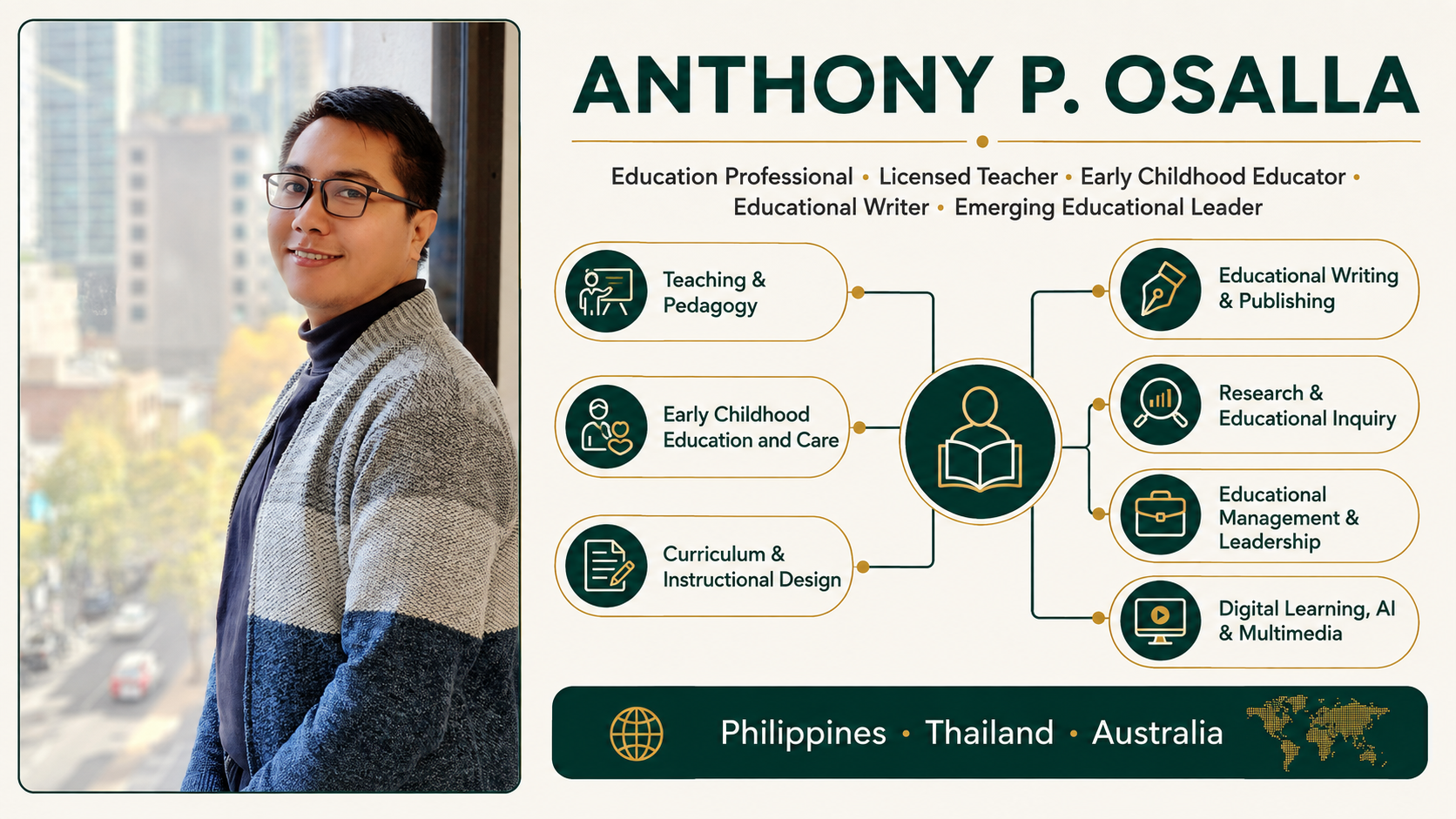
Guided Visual Summary
Seven connected professional domains show how practitioner experience, educational design, inquiry, communication and contemporary digital practice contribute to one professional profile.
The visual places Anthony P. Osalla at the centre of seven connected professional domains:
These areas connect teaching experience with educational writing, research and learning design.
Educational Approach
These principles govern decisions about what to include, how to structure it, what evidence is needed, and how quality should be tested.
Intellectual and Professional Interests
Structuring coherent learning pathways, outcomes, content, activities, and assessment.
Developing professionally usable books, guidebooks, manuals, and educational resources.
Connecting curriculum structures with learner experience, facilitation, delivery, and implementation.
Designing practice-oriented learning for educators and education professionals.
Examining responsible, human-centred, and evidence-aware applications of generative AI.
Strengthening alignment, validation, accessibility, documentation, and revision processes.
Applying curriculum planning, documentation, inclusion, family engagement, and service practice.
Using literature-informed inquiry and professional evidence to support educational decisions.
Longer-Term Direction
Educational leadership is presented here as a developing professional direction grounded in practice, design, management, evidence, communication and responsible innovation.
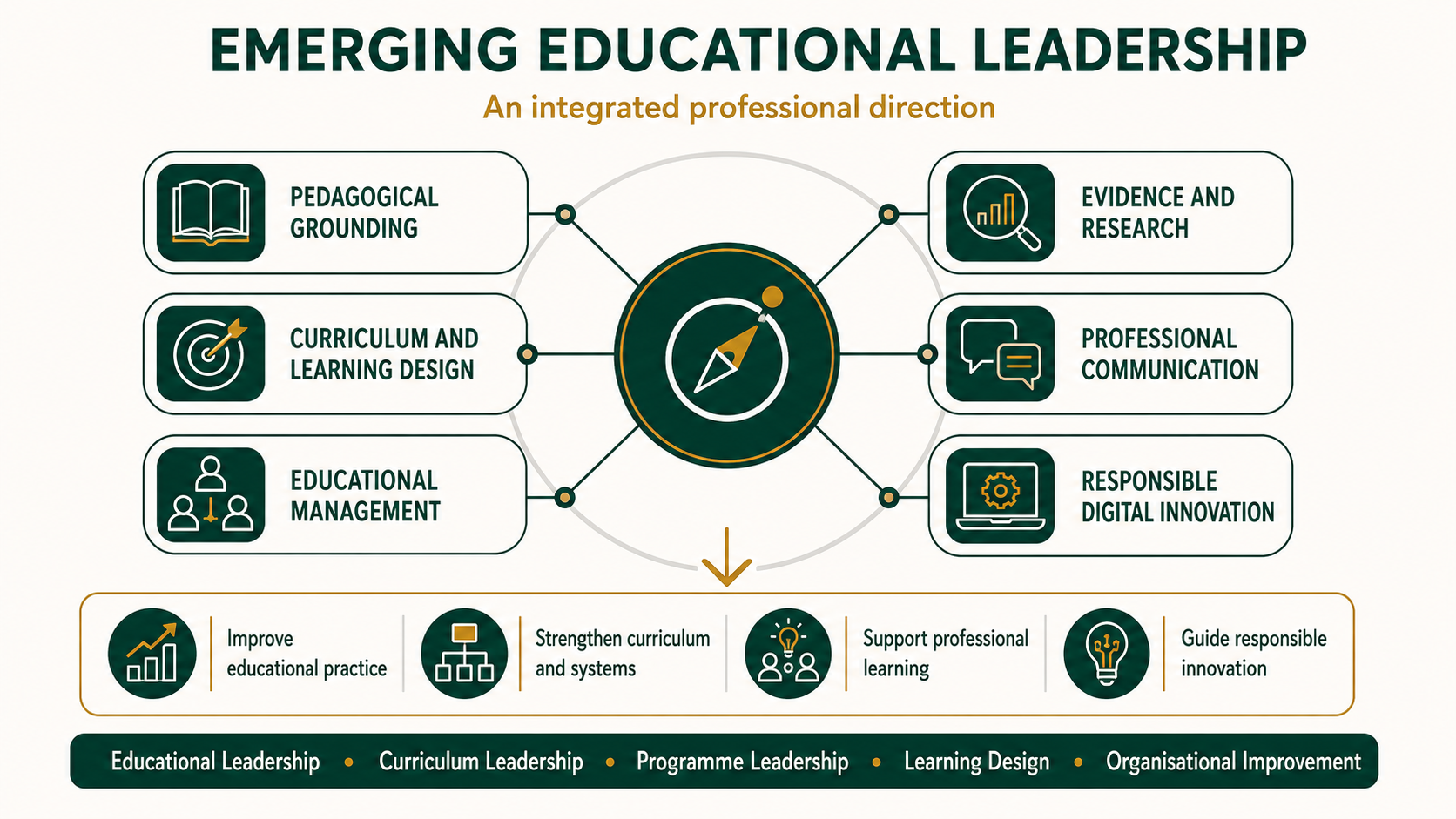
Guided Visual Summary
The visual shows the professional foundations that support Anthony’s longer-term direction and the forms of educational contribution they can strengthen.
Six professional foundations converge on emerging educational leadership:
The visual connects these foundations with curriculum quality, professional learning, organisational improvement and responsible innovation.
Selected Work
View educational writing, frameworks, curriculum systems, and generative-AI-in-education work.