Work Library

01 Identify

FrameworkCompleted2026

The Osalla Framework

A five-stage structural method for converting raw expertise into coherent, measurable, and engaging e-learning curricula.

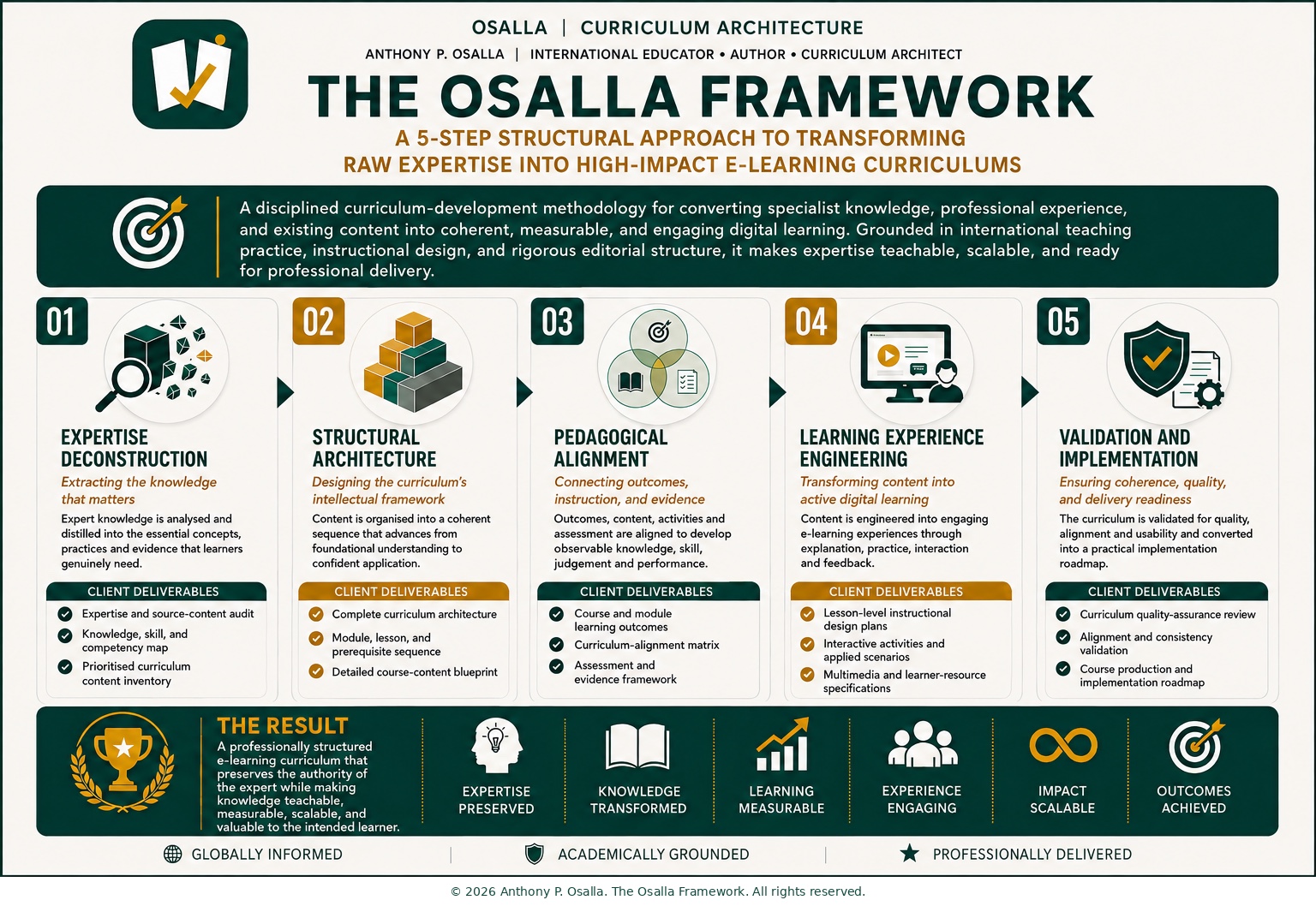
The Osalla Framework five-stage instructional design infographic
02

Project Rationale

What the work addresses and why it exists

The Osalla Framework is a five-stage curriculum-development methodology for converting specialist knowledge, professional experience, and existing content into structured digital learning. It responds to a recurring design problem: valuable expertise is rarely organised for learner progression, assessment, accessibility, or scalable delivery. The Framework begins by clarifying the knowledge that matters, then establishes the curriculum’s intellectual sequence before aligning outcomes, instruction, and evidence. Learning experiences are engineered only after that alignment is established, and the completed system is then validated for coherence, usability, accessibility, and implementation readiness. The intended result is not a simplified version of expert knowledge, but a teachable structure that preserves its authority while making learning observable and usable. It is intended for educators, education professionals, subject-matter experts, and curriculum practitioners developing structured e-learning.
03

How the Work Operates

Structure, sequence, and instructional logic

01

Stage 1 of 5

Expertise Deconstruction

Extracting the knowledge that matters

Raw expertise is interrogated, clarified and separated into essential concepts, applied practices, decision processes and supporting evidence. Repetition, ambiguity and material that does not serve the learner are removed.

Principal deliverables

  • Expertise and source-content audit
  • Knowledge, skill and competency map
  • Prioritised curriculum content inventory

Enables the next stage: Structural Architecture

Apply the framework

Choose a stage for a curriculum design problem

Use these illustrative scenarios to explain which stage addresses a design need. Read the feedback, then identify the next action. This is practice, rather than a formal assessment.

Choose a scenario

An expert provides a long set of notes containing repeated explanations, specialist terms and examples of unequal relevance.

Which stage most directly addresses this need?

Select a stage to receive feedback.

Compare an outcome with its assessment

Outcome: justify a curriculum design decision using stated criteria. Switch between the two examples and consider what each assessment would show.

Initial assessment

List the names of the five framework stages.

This task checks recall of terminology. It does not show whether the learner can justify a design decision.

Reflect on your own course

Choose one outcome. Identify the action learners must demonstrate, the practice that prepares them and the evidence the assessment will collect. Explain any gap and propose one revision.

Principal Components

01

Expertise and source-content audit

02

Curriculum architecture and course-content blueprint

03

Learning outcomes and curriculum-alignment matrix

04

Instructional design plans and applied activities

05

Quality-assurance review and implementation roadmap

04

Evidence

Review professional artefacts

Each artefact connects a project decision with the capability it demonstrates.

The original Osalla Framework infographic showing the five-stage curriculum-development system.
Framework visual

The Osalla Framework Original Infographic

Presents the complete five-stage system, the function of each stage, selected deliverables, and the intended results as one connected visual architecture.

Title slide for The Osalla Framework instructional deck
Framework identity · Page 1 of 3

Framework Instructional Deck: Selected Slides

Three slides introduce the Framework, the professional problem it addresses and the developmental relationship among its five stages.

05

Development and Design Decisions

The reasoning visible in the architecture

  1. 01

    The architecture begins with expertise deconstruction so the source knowledge is clarified before it is reorganised for teaching.

  2. 02

    Structural architecture precedes pedagogical alignment because learning outcomes and assessment evidence require a defensible content sequence.

  3. 03

    Learning experience engineering follows alignment so activities, interaction, multimedia, and resources serve defined learning rather than decorate content.

  4. 04

    Validation and implementation form the final stage because quality can be tested meaningfully only after the complete curriculum system is visible.

06

Verify and Continue

Capabilities, project record, and related work

Capabilities connected to evidence

Curriculum ArchitectureEvidence: The Osalla Framework Original Infographic
Instructional DesignEvidence: The Osalla Framework Original Infographic

Project record

Professional Enquiries

Discuss this educational work.

Use the contact page for an appropriate professional, publishing, curriculum, research, or collaboration enquiry.

Contact Anthony